Music Therapy at NCMS
What is Music Therapy?
Music therapy combines music and therapeutic needs to benefit individuals, groups, communities, and society. The music therapist provides musical experiences and resources that guide participants towards health, wellbeing, and empowerment.
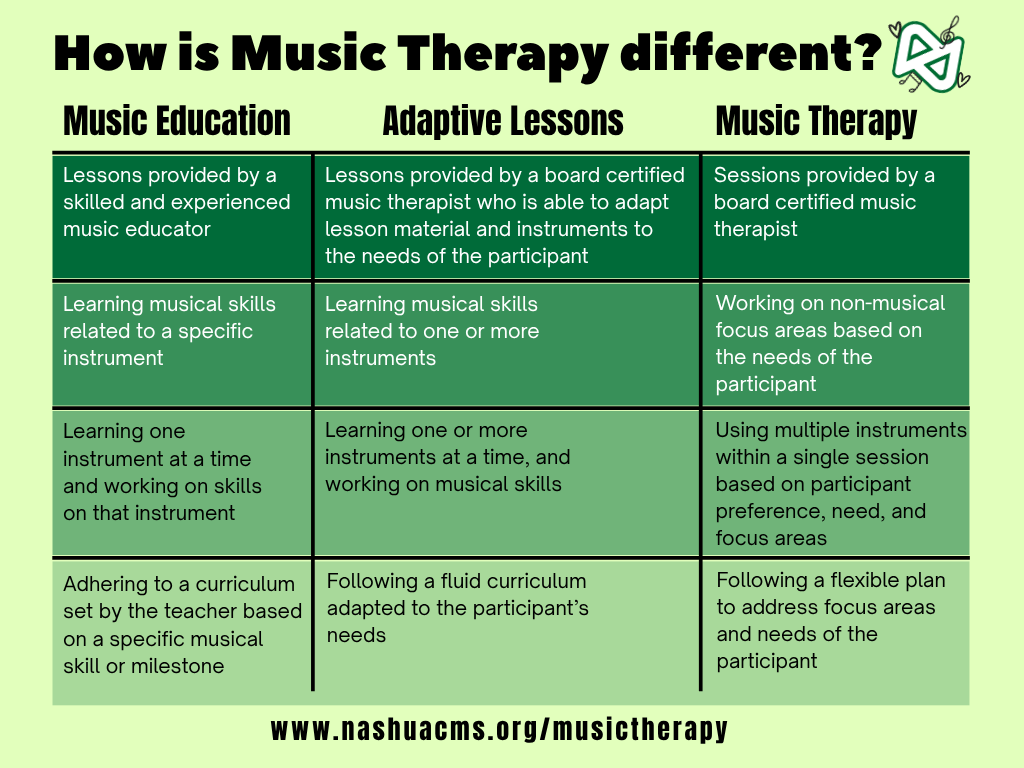
How is Music Therapy different?
(Expand below for more information)
-
Lessons provided by a skilled and experienced music educator
Learning musical skills related to a specific instrument
Learning one instrument at a time and working on skills on that instrument
Adhering to a curriculum set by the teacher based on a specific musical skill or milestone
-
Lessons provided by a board certified music therapist who is able to adapt lesson material and instruments to the needs of the participant
Learning musical skills related to one or more instruments
Learning one or more instruments at a time, and working on musical skills
Following a fluid curriculum adapted to the participant’s needs
-
Sessions provided by a board certified music therapist
Working on non-musical focus areas based on the needs of the participant
Using multiple instruments within a single session based on participant preference, need, and focus areas
Following a flexible plan to address focus areas and needs of the participant
What does Music Therapy look like?
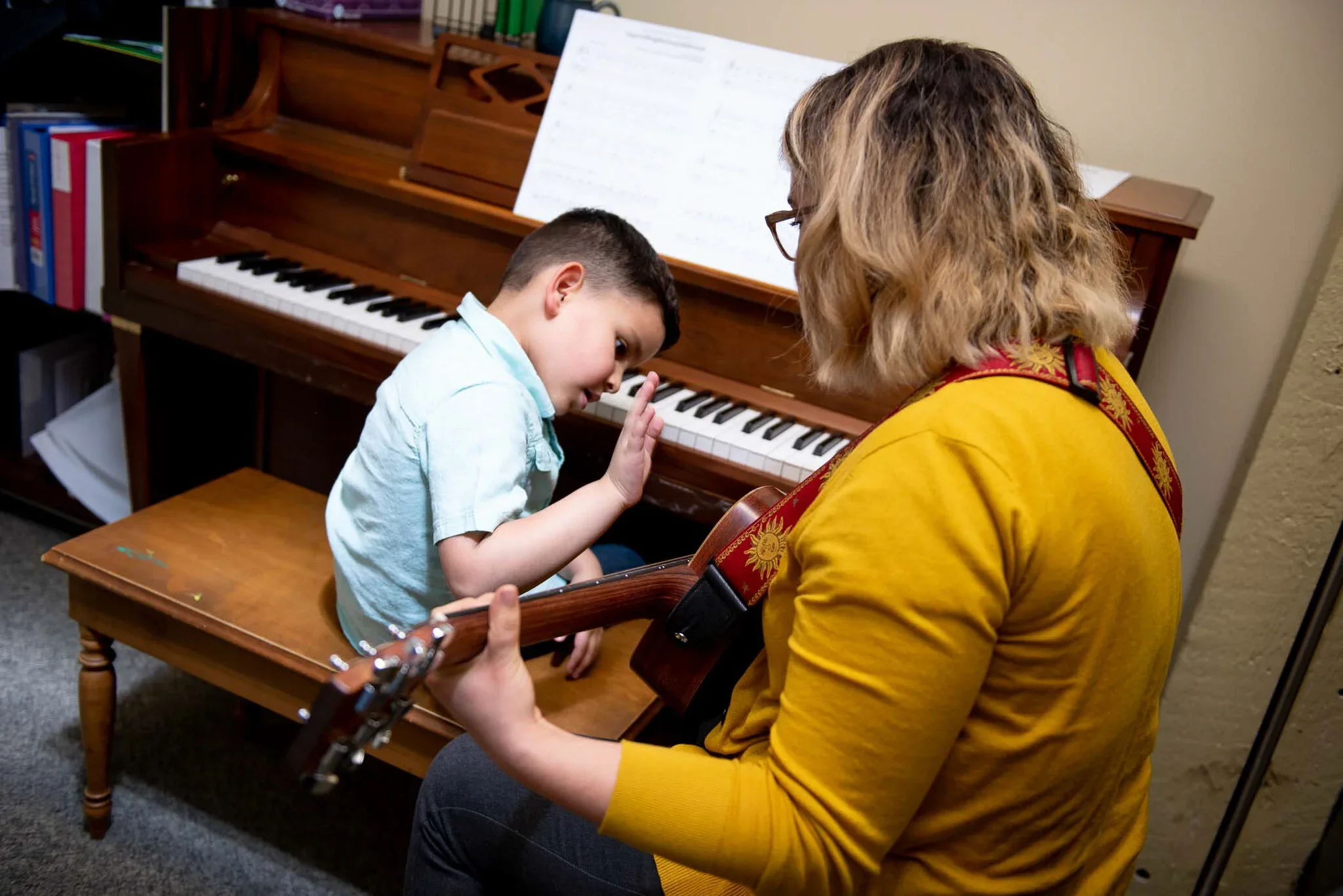
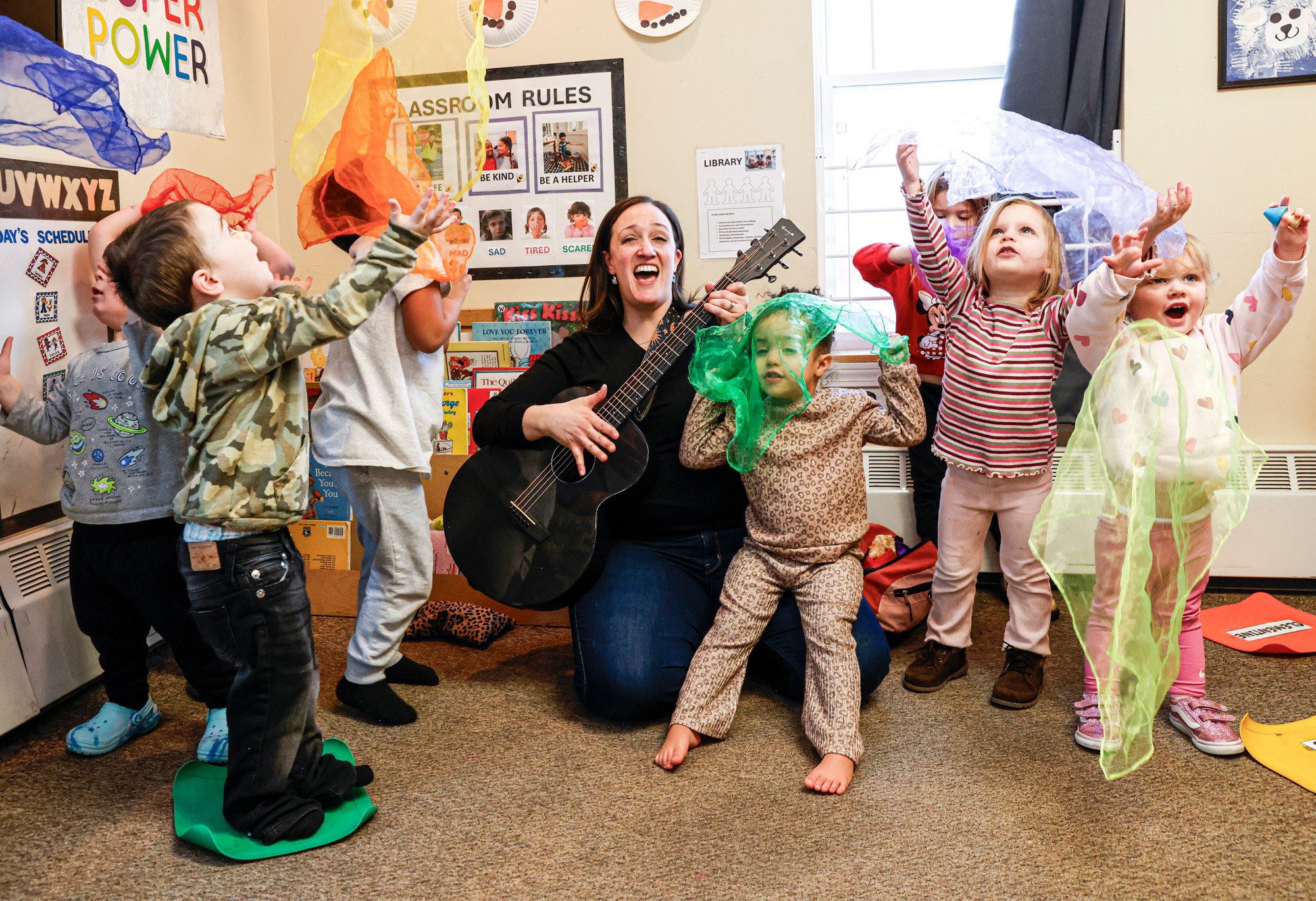
Music therapy sessions look different for each participant or group, but might include:
Singing
Creating music
Movement to music
Learning music
Instrument playing
Songwriting
Listening to music
Discussing music
Music meditation
Incorporating other creative modalities such as art or dance
& MORE!
Music Therapist Qualifications

Music therapists hold a bachelor’s degree or higher (or an equivalent) in music therapy. The Certification Board for Music Therapists oversees the credential Music Therapist - Board Certified (MT-BC). Music therapists are required to re-certify every five years through continuing education experiences.
Who is Music Therapy for?
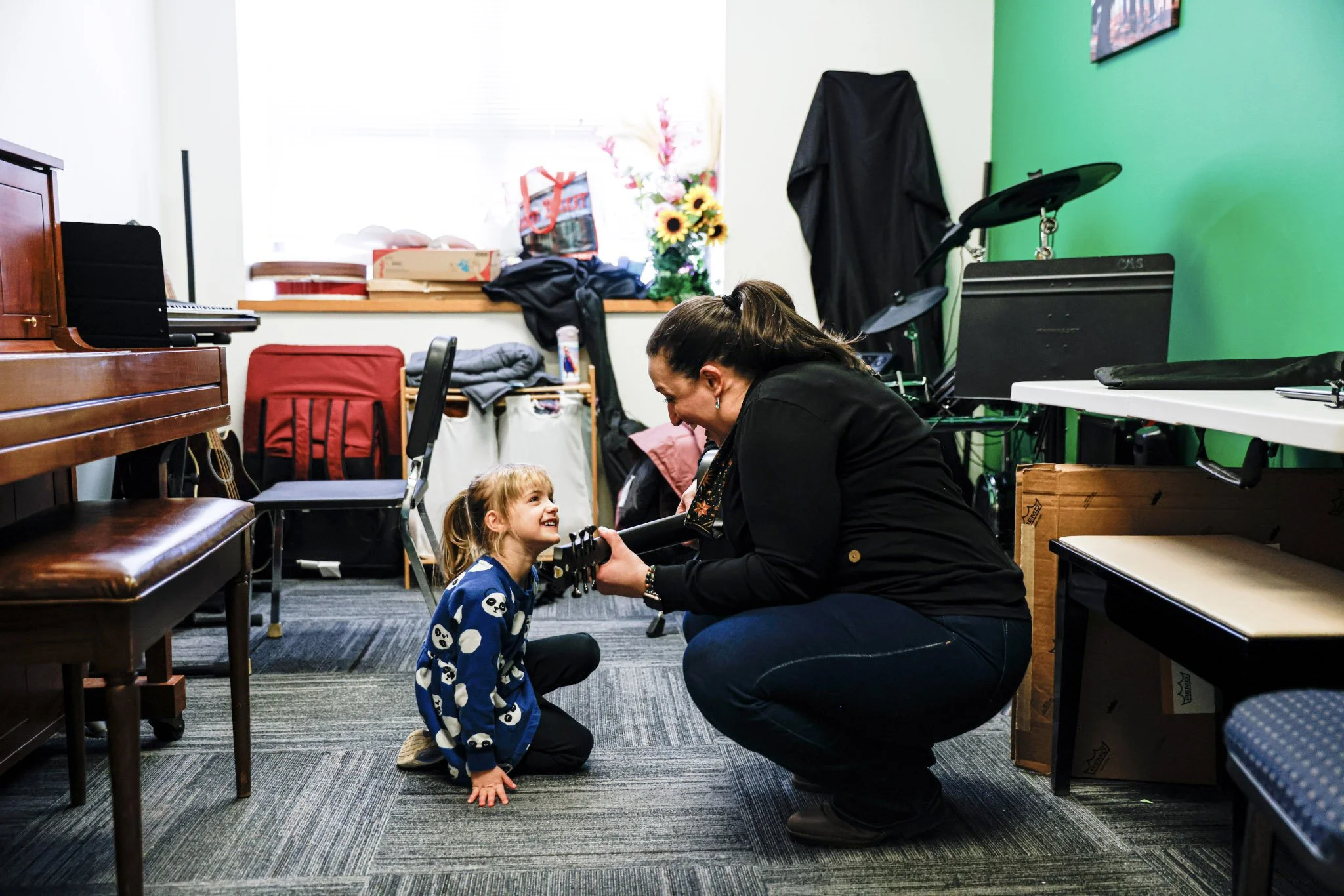
Photographer Cheryl Senter
Music therapy is for everyone!
Individuals, groups, and organizations
People of all ages
People living with mental health challenges and neurodivergence
People with physical and/or cognitive disabilities
People who are musical…
& people who are not!
What Makes Music Therapy at NCMS Special?
We use therapeutic approaches that are strengths-based, anti-racist, and anti-oppressive:
Strengths-based therapy empowers a person (or a community) to find their own strengths and use those strengths to create their own change.
Anti-racist practice acknowledges that music therapy was created by and for white-centric systems of power. It challenges established ways of music therapy practice and finds new ways rooted in community and collaboration.
Anti-oppressive practice understands that a person’s problems cannot exist outside of the larger world around them. It puts personal problems and their solutions into a larger context.
We are trained in trauma-informed care:
We ask “What happened to you?” instead of “What’s wrong with you?”
We recognize that most behavior is a response to trauma and should be looked at through that lens first before medicalizing or pathologizing it.
We approach all aspects of music therapy practice in ways that avoid re-traumatization.
We work in anti-ableism:
We have disabled and neurodiverse music therapists on staff.
We adapt to the needs of our staff, music therapy participants, and communities.
We listen to and learn from our staff, music therapy participants, and communities.
We work collaboratively with our staff, music therapy participants, and communities.
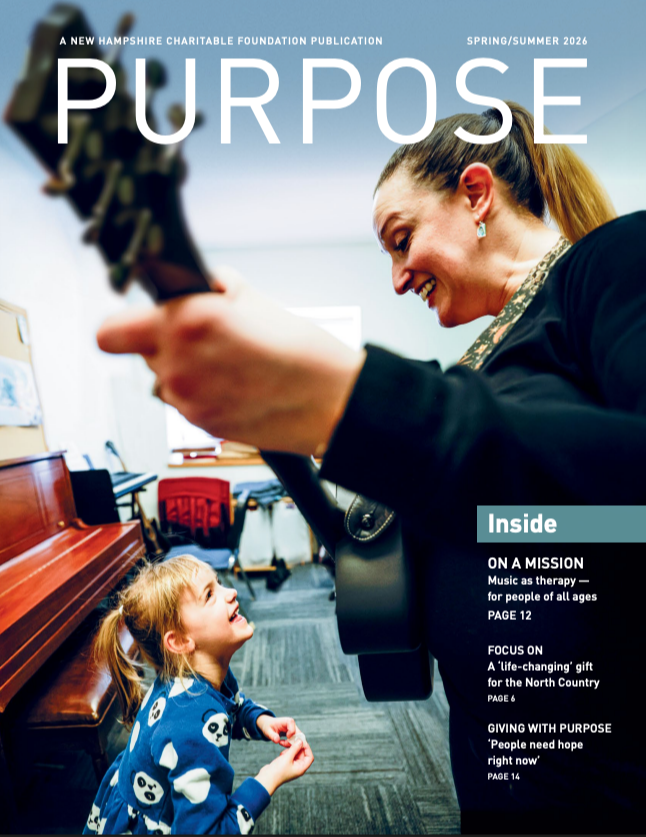
NCMS Music Therapy Program featured in the New Hampshire Charitable Foundation Publication, PURPOSE (Spring/Summer 2026)
“TOUCHING LIVES ACROSS GENERATIONS:
Music therapy program at Nashua Community Music School helps young children, adults and veterans.”
»Click here to read the online article!«
»Click here to see the digital copy of the printed publication!«
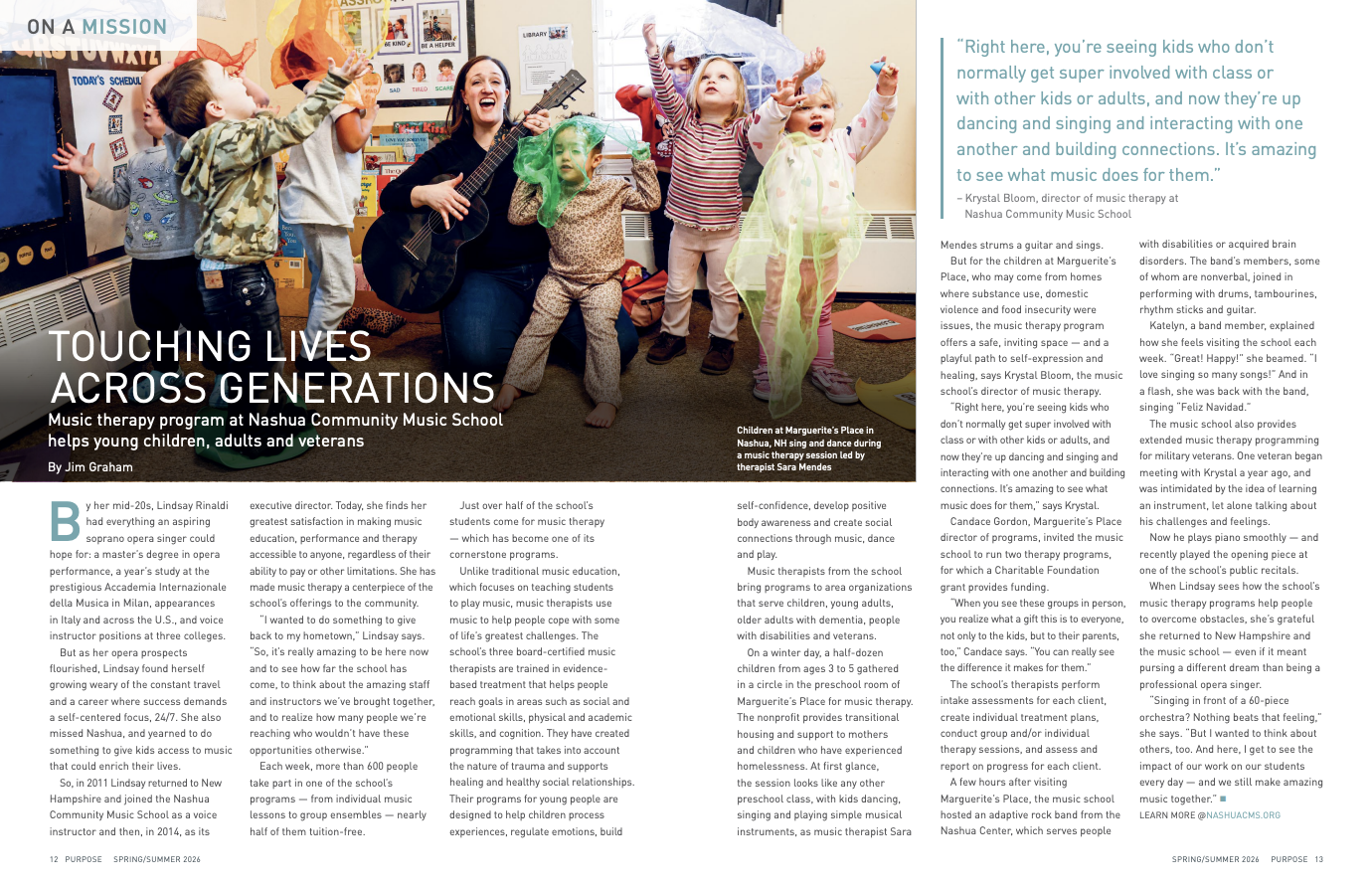
Support Music Therapy at NCMS
Make a difference in your community! Make a donation or sponsor a music therapy program at the Nashua Community Music School!
Interested in bringing a music therapy program to your business or organization? Connect with us today to discuss your options!